Sealing locks drills in place and keeps dust off. Compare brush-on sealer, spray sealer and framing under glass, with steps and fixes for cloudy results.
To seal a diamond painting, make sure every drill is pressed in flat, clean the surface, then apply a thin, even coat of a brush-on sealer (such as Mod Podge or a dedicated diamond painting sealer), a spray sealer, or press it under glass in a frame. Sealing locks loose drills in place, stops dust from sticking to the exposed glue, and helps the canvas keep its sparkle for years. Below are the three methods compared, step-by-step instructions for each, and the mistakes that cause cloudy or sticky results.
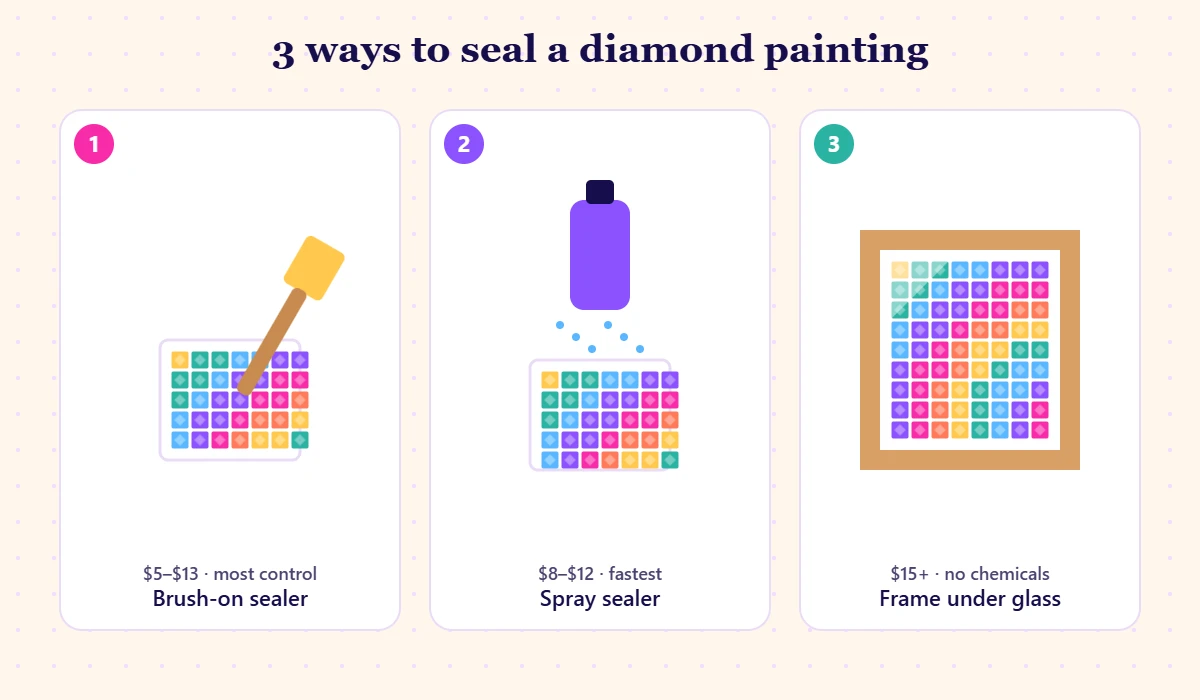
Total cost: about $5–$15. A bottle of Mod Podge or brush-on diamond painting sealer (about $5–$10) plus a foam brush (about $1–$3). A can of clear acrylic spray sealer runs about $8–$12. Framing under glass costs more, from about $15 for a basic frame.
Do you need to seal a diamond painting?
Not always. If you'll frame it behind glass, the frame protects it and you can skip sealer. Seal it if you plan to hang it without glass, roll it up for storage, or if your kit's glue is weak and drills keep popping off.
Before you seal: prep the canvas
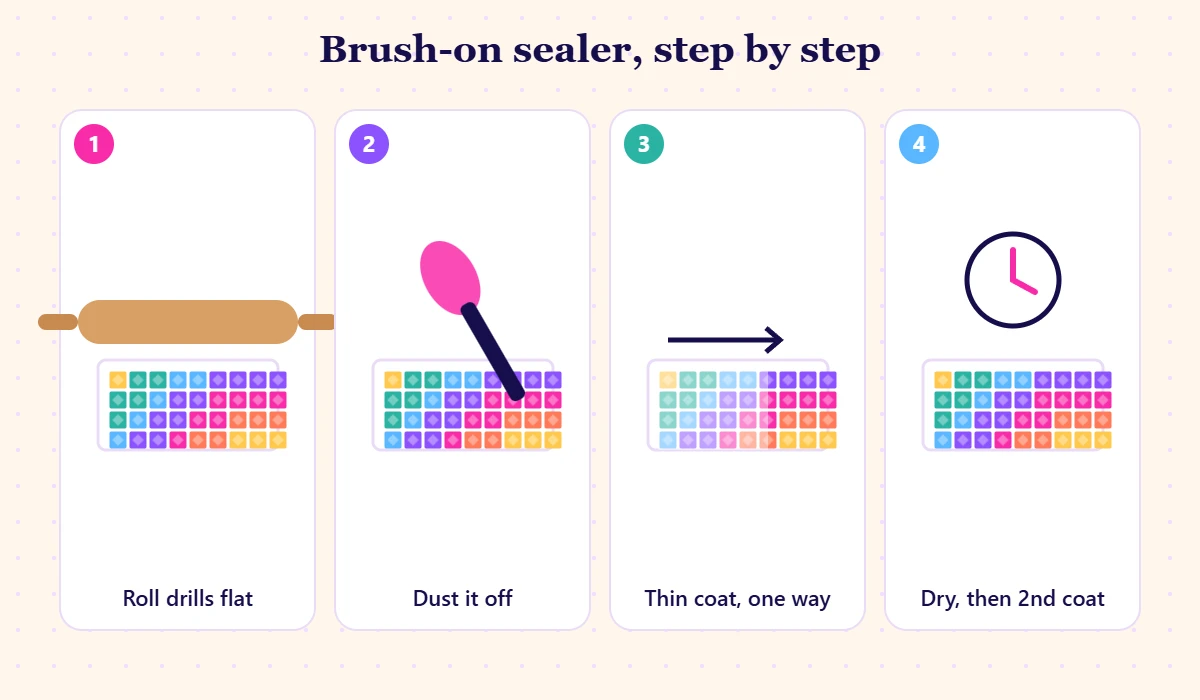
- Press every drill down. Lay a sheet of parchment paper or the canvas's protective film over the finished painting and roll over it firmly with a rolling pin or a smooth glass bottle. This re-seats any drills that are slightly tilted.
- Fix gaps and crooked drills. Straighten rows with tweezers and fill in any missing drills.
- Flatten the canvas. If it's curled from the tube, lay it face down on a clean towel, cover it, and leave heavy books on top overnight.
- Clean the surface. Brush off loose drills and dust with a soft makeup brush or a lint-free cloth. Anything left on the surface gets sealed in.
- Cover exposed glue on the border. Put masking tape or paper over the sticky border if you'll be mounting it later.
Method 1: Brush-on sealer (best for most people)
Brush-on sealers give you the most control and the most even coverage, especially on square drills where liquid can pool in the gaps.
- Work in a well-ventilated, dust-free spot with the canvas lying completely flat.
- Pour a small amount of sealer into a dish. Load a foam brush lightly; you want a thin coat, not a puddle.
- Brush in one direction across a small section at a time, working the sealer into the gaps between drills.
- Check from an angle in good light for bubbles or thick spots and smooth them out before they dry.
- Let it dry completely, usually a few hours. Add a second thin coat if drills still feel loose.
Tip: Mod Podge goes on white but dries clear. A thick coat can stay cloudy, so thin coats are the key. Choose a gloss finish to keep the most sparkle.
Method 2: Spray sealer (fastest)
A clear acrylic spray sealer covers the whole canvas in a couple of minutes and doesn't leave brush marks.
- Take the canvas outside or into a garage. Protect the surface underneath and avoid windy or humid days.
- Shake the can for at least a minute.
- Hold the can 10–12 inches away and spray in light, steady, overlapping passes.
- Let the first coat dry, then add a second light coat, spraying at a different angle to reach the sides of the drills.
- Let it cure fully, according to the can, before hanging or rolling.
Watch out: spraying too close or too heavily causes drips and a cloudy haze. Some sprays can also yellow over time, so pick a non-yellowing, UV-resistant formula.
Method 3: Frame under glass (no sealer needed)
Pressing the canvas under glass holds every drill in place and keeps dust out with no chemicals at all. Trim the canvas border if needed, place it face up on the frame's backing board, set the glass on top and close the frame firmly. Many diamond painters skip sealing entirely for framed pieces.
Which method should you choose?
| Method | Approx. cost | Best for | Downside |
|---|---|---|---|
| Brush-on sealer | $5–$13 | Most canvases, square drills, loose drills | Slower; can cloud if applied thick |
| Spray sealer | $8–$12 | Large canvases, quick finish | Needs ventilation; risk of drips or haze |
| Glass frame | $15+ | Display pieces you'll hang | Costs more; adds weight |
Common sealing mistakes
The sealer dried cloudy
The coat was too thick, or it was humid. Let it cure fully; light cloudiness often clears in a day or two. For future canvases, use thinner coats.
The canvas is sticky
Exposed glue on the border or between drills is still tacky, or the sealer hasn't cured. Wait longer, and cover borders before sealing.
Drills slid out of line
Too much liquid floated the drills. Straighten them with tweezers while the sealer is still wet and use less next time.
Looking for your next canvas? Browse more tips in Diamond Painting, or try a different relaxing craft such as hand embroidery.
FAQ
Can I use Mod Podge to seal a diamond painting?
Yes. Gloss Mod Podge is one of the most popular sealers. Apply thin coats with a foam brush so it dries clear.
Does sealing a diamond painting make it lose its sparkle?
A thin coat of a gloss sealer keeps most of the shine. Matte sealers and thick coats dull the drills, so avoid them.
How long should a diamond painting dry after sealing?
Most brush-on and spray sealers are dry to the touch within an hour or two but need 24 hours or more to cure. Check the label.
Should I seal a diamond painting with round or square drills?
Both can be sealed. Square drills fit tightly, so brush the sealer in carefully to reach the gaps; round drills leave more glue exposed, so sealing them helps keep dust off.